Do I need to diet??

422952959_e1b4782ffb_z

When I meet someone who has been newly diagnosed their initial questions usually involve food and how things will change moving forward. “Can I still have pizza? What about dessert?” YES. “Does this mean I can’t have pasta or drink beer?” NO. I am not going to say that you will not have to make changes but you can start with small changes first. The small changes make it easier and more likely that you will stick with it. And please don’t ever apologize or say that you “cheated”- EVERYONE will indulge occasionally from time to time and it is alright- as long as its not frequently. Also you’ll never hear me use the word “diet” because that to me describes something short term that involves giving up everything you love and replacing it with many things you don’t. Instead, I will help you make lifestyle changes that will include eating your favorite foods while keep your numbers in check. There will be many more blogs to come on this topic but I promise you will like what you read.

The end goal is a healthier you! However, should you happen to inspire others along the way (friends, family, co-workers) then you’ll feel even more rewarded! I have also taught an adult weight loss class for many years at my church and seeing the participants at the start and then 12 weeks later and listening to all they have learned and the changes they have made is so inspiring. I know that you too have it in you to make the changes you need to help your body. The key is never stop learning and reading and seeking out new ideas to keep healthy eating fresh and fun! Stick with me!!

just for today

Your “just for today” challenge is to drink 6-8 glasses of water (try drinking a full one when you get up and prior to eating each meal, could potentially help you to decrease the amount you are about to consume!)
To Test or Not To Test?

10871254373_07e4989b3c_k

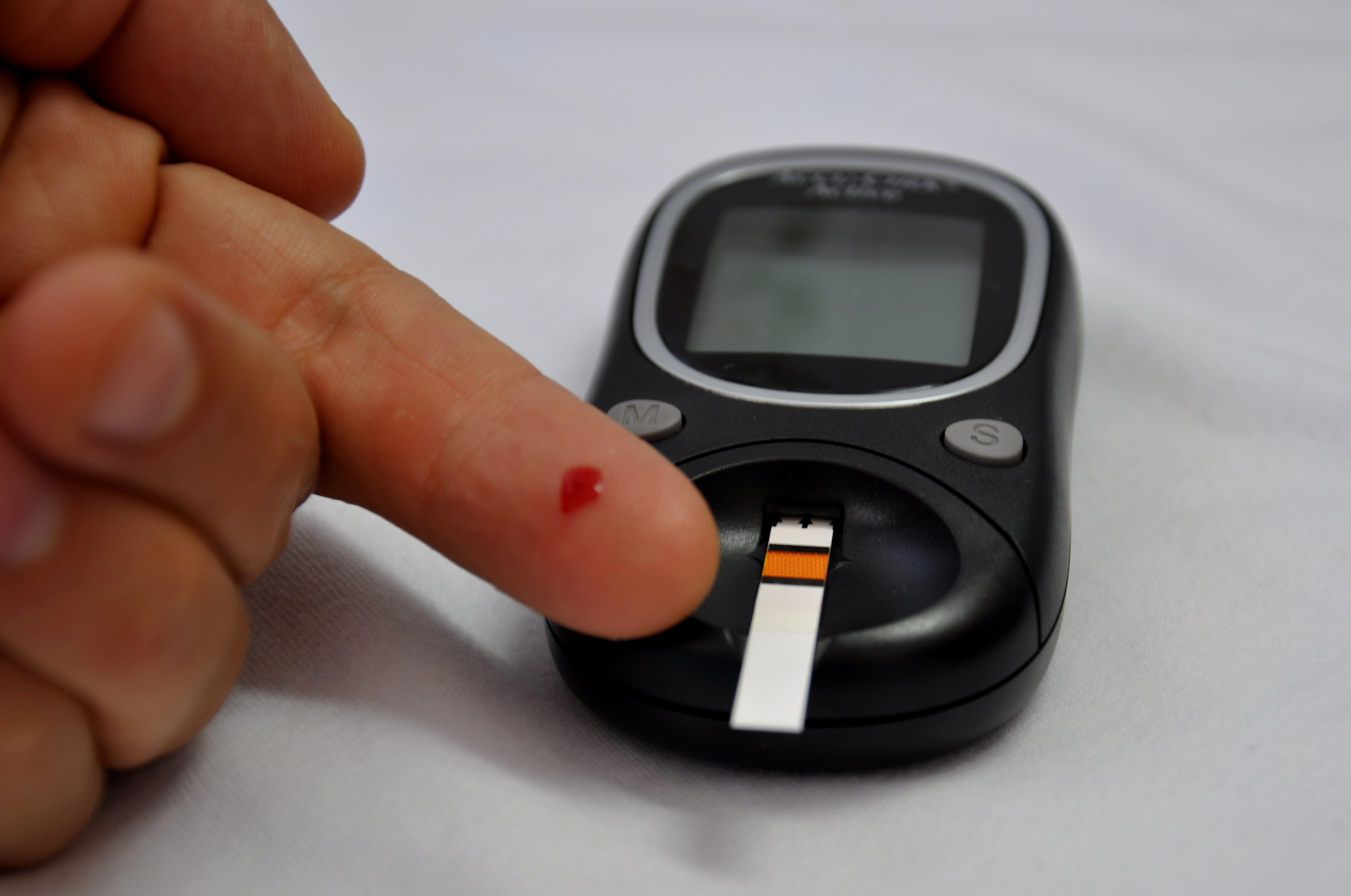
Depending on your type of diabetes and also the medications you have been prescribed, your Doctor might ask you to begin testing your blood sugar (also called blood glucose). If your Doctor has not asked you to do this yet the process is done by pricking a finger with a small needle (called a lancet) and placing a drop of blood onto a test strip which registers to your blood glucose meter what your current blood sugar number is.

Testing your blood sugar is an extremely important part of controlling your diabetes and getting your A1C under 7. Without those numbers, you and your doctor will have no idea if what you are currently doing is working or not. Also it is the biggest indicator of what your A1C will be. Is it fun? No. Can it be a pain to have to do before each meal? Yes, I am sure it can be. Will it hurt if I skip one? No, however in my experience missing one can lead to two….can lead to a lot…and all of a sudden you have gotten away from consistent testing. Does it take a lot of time? No, once you are used to it you will be able to test effectively in under a minute!

There are many different types of meter brands and your Doctor or Diabetes Educator will provide you with one that they feel will work the best or whichever is covered by your insurance company. The strips for the meters are NOT cheap so it is important to make sure it is covered and also that you have good technique so you don’t waste any strips. The 2 biggest tips I want to give you are:

#1 Always wash your hands first. I know this sounds “motherly” however it can make a big difference especially if prior to testing you touched anything sugary (fruit, syrup, juice). I have heard that even some lotions can cause inaccurate numbers. The last thing you would want is for the meter to read higher than you really are.

#2 Get a big enough drop of blood to cover the strip. If you do not cover the strip it will read error and you will need to waste that one. Some of the newest meters use strips that require a very small amount of blood. And actually the meter I am most familiar with through work is the Bayer Contour Next.  Not only does it use a very tiny amount of blood, it will also allow you 5 seconds to add additional blood if there is not enough. It sounds silly and small but strips average about $1 a piece so wasting any amount will really add up. Another small thing you can do prior testing that can help is wash your hands with warm water to get the blood moving and once you prick your finger you can hold your finger down and push the blood to the tip of your finger.

Your Doctor will determine if you need to begin testing your blood sugar and how often. Once you are asked to test it is a good idea to keep your numbers either written down or in a computer program that can be downloaded from your meter and printed for your Doctor. This is one of the best things you can do prior to your appointments! Just like me, your Doctor wants you to succeed however he/she is only able to help you with the information you provide them. So help them (and you) out by giving them this information. They will be very grateful- at least I would be!!!

just for today

Your “just for today” challenge is if you have a meter, use it!!

ABC’s and 123’s: the abbreviations and numbers to know

ABC's & 123's

Once you are diagnosed with diabetes there will be a bunch of new terms and number ranges you want to become familiar with. (Your Doctor might have slightly different goals for you than the numbers listed below)


Lab values:
A1C (also referred to as a hemoglobin A1C)  This is the biggie! I describe this to my patients as their diabetes report card (for those of you who have been out of school for a while you probably thought you had seen your last report card years ago). It is an average of your blood sugars over the past 3 months. Because it is an average, remember that 1 or 2 bad numbers will not cause it to go up. Also you can start today working on improving your numbers and the change will show in your next lab work! Goal is less than 7
BP (blood pressure) You can work to decrease your blood pressure by decreasing your salt intake, exercising regularly, maintaining a healthy weight, limit alcohol intake, stop smoking, and take any medications as prescribed. Goal is 120/80 although some say 110/70
C Peptide measures the amount of insulin your body is still making on its own. Those with Type 1 diabetes will have lower levels or potentially even <0.1 whereas Type 2’s might have low, normal, or even high levels due to increased production to combat the resistance
LDL (low-density lipoprotein) This is the BAD cholesterol and it attaches its self to the walls of your blood vessels. Over time, it builds up and can eventually lead to a narrowing or blockage increasing your risk for a heart attack.  Goal is less than 100
HDL (high-density lipoprotein) This is known as the GOOD cholesterol. It floats around in your blood stream and removes the bad cholesterol. Goal is greater than 40 in men and greater than 50 in women 
Triglycerides are created from excess food you consume. They are stored in your fat cells and can be released in between meals for energy. Goal is less than 150


Here are some of the diabetes terms you might see:
B.S. or B.G. refer to your Blood Sugar or Blood Glucose readings when you prick your finger and use your meter to test
DKA (Diabetic Ketoacidosis) refers to a serious condition where the body is lacking insulin. When this occurs, the body will start to use stored fat for energy which causes ketones, a poison, to be released.  These ketones can cause nausea/vomiting and can be very serious if not addressed early.
FBS (Fasting Blood Sugar) is a blood sugar tested after at least 8 hours after your last meal. It can be used as part of the criteria for diagnosis of Type 2 diabetes. Goal is less than 100 for and less than 120 for pre-diabetics 
Preprandial Blood Sugar refers to a blood sugar prior to eating a meal. Goal 80-130*
Postprandial Blood Sugar refers to a blood sugar test 1-2 hours after eating a meal. Goal is under 180*


Here is a few of the people you might meet:
Endocrinologist is a doctor who specializes in endocrine disorders, one of which is diabetes
RN (Registered Nurse)
RD (Registered Dietician)
CDE (Certified Diabetes Educator)- has completed over 2000 hours of patients education before passing an exam specific to diabetes knowledge and they are well rounded in all aspects of diabetes education
Don’t worry there is not test. I just wanted you to be familiar with some of the terms and words you might hear at your appointments or read in articles. I am committed to giving you plenty of suggestions on how to get all of your numbers within the goal ranges. It will not be without a partnership on your part but you can count on me to provide you the information you will need!

just for today
Your “just for today” challenge is to check your blood pressure (can be done at most store pharmacies)
*your Doctor might have different ranges for you to follow

5 Common Myths about Diabetes

myth vs fact

My patients will often ask me open and honest questions about things they have heard or been told about their diabetes.  I have listed below a few of the most common myths that I hear. Never be afraid to ask if there is something you are concerned about because most of the time it isn’t true!

  1. Insulin is bad for you– I will devote an entire blog to this topic in the future, but NO insulin is not bad for you.  Nor is it a punishment because you weren’t able to lose the weight or maintain good blood sugars by eating healthy. Remember, those with Type 1 diabetes need insulin to survive and therefore it is not bad- it is lifesaving! Insulin is something that many to most Type 2 diabetics will need at some point. If your doctor recommends that you go on insulin, then they feel that what you are currently doing  will not get your A1C to the goal of less than 7. Remember, most of the time it is just the normal progression of Type 2 which will require you to need insulin.
  2. You can never eat sweets again– This is another future blog probably because it is the one that many of you are most curious about. The answer is YES of course you can still have sweets. Should you have them every day or more than once a day- No.  However, neither should those without diabetes. For special occasions I absolutely want you to enjoy and have some dessert but I intend to teach you how to eat the sweets to minimize the high blood sugar spikes. For now, enjoy!!… but try to limit to 1-3 per week.
  3. I have “a little bit of sugar”– Pre diabetes refers to people whose blood sugars are not high enough to be diagnosed with diabetes but they are not within normal limits. This group of people have time to make a change which could prevent or delay the onset of diabetes. Often this involves changing current eating habits and increasing activity levels. Even though this blog is devoted to helping those with diabetes, the changes you will read are without a doubt helpful for anyone also trying to prevent diabetes. I urge you to make changes starting TODAY if you are in this category. Once your doctor makes the diagnosis of diabetes, you no longer fall into the pre diabetes category.
  4. My diabetes is cured- Sometimes the positive changes you make will help you to decrease or even stop the medication you are taking. And while this is absolutely an amazing accomplishment (you should be proud!!) it does not mean that you no longer have diabetes. I hope that I can recommend many changes and tools that will empower you to improve your blood sugars.  That is still the goal, and being able to decrease the medications you are taking is definitely a positive outcome! Unfortunately, any amount of weight gain or decrease in activity could cause the numbers to rise again. But do not lose hope, your desire to make the changes is what brought you here and I will help you as much as I can.
  5. Complications are inevitable- Please know that this is probably the most concerning to many that I work with, but know that if any of your family members suffered a complication of diabetes, that does not mean that it will also happen to you. Complications occur from years of high blood sugars so if you are able to get your blood sugars under control then it does not have to happen. This is the goal for lifeunder7, to help you all avoid these complications and live your healthiest life!!

Your “just for today” challenge is to not have dessert- remember its just for today 🙂 but your overall goal is to limit your desserts to 1-3 times a week. Be honest with yourself and decrease from what you are currently doing. Any change will have a positive effect!!

Ready to go back to school?? Learn all about what’s happening in your body

7887766094_4194ba05fd_m

Ok, so boring as it may be, learning what is actually going on in your body will help you to understand the medications and how they will help to control your blood sugars. I promise to keep it as light as possible but I hope that it is informative!

Our bodies are made up of cells and all those cells need energy to get you out of bed, help you get to work, and get you through your day. The main source of energy comes from the carbohydrates that you eat. They turn into sugar and get absorbed from your stomach into your blood stream. It is insulin which gets that sugar into your cells to be used for energy. This keeps good balance and normal blood sugar levels

.IMG_1441

So let’s stop for a second and think about what happens when there is not enough insulin in your body. Without insulin that sugar stays stuck in your blood stream and the result are levels higher than normal.

Now if you read the previous blog you know there are 2 types of diabetes: 1 and 2. Type 1 is an autoimmune condition, which means that the body attacks and destroys its own cells. In this case, the cells targeted and destroyed are called Beta cells and they help to make up part of your Pancreas. When these cells are gone, blood sugar levels rise, usually over a period of time until the body begins to compensate and the child becomes sick. I will post a blog soon about the symptoms associated with high blood sugars and what most experience with their initial diagnosis.

IMG_1442

Type 2 is a different story. A person with Type 2 diabetes may have different initial causes of their high blood sugars. Often it is a resistance (think of a barrier around your cells) which prevents the insulin from getting the sugar inside. Again blood sugar levels will rise, but not as dramatically which is why someone with Type 2 might have higher than normal levels for many years prior to being diagnosed. There are also other factors at play in Type 2 diabetes. An important one to mention is your liver. The liver plays an important part in regulating blood sugar levels in the body. When our levels go to low the liver will help by releasing “back up” sugar. This is sugar the body has on reserve in case of emergencies. With Type 2 diabetes, the cells which have become resistant to insulin, are not getting the sugar that they need for energy. The liver is then tricked into thinking it needs to release the emergency sugar. Ironically, this adds to the problem of higher blood sugar levels.

IMG_1443

That’s it!! Of course this was just a brief overview but here are some links if you want to read more:

P.S.  your “just for today” challenge is to click on one of the 2 links above to learn a little bit more about your diabetes!

Knowing your type- 1 or 2

lifeunder7-10 It is important to know and understand which type of diabetes you have.  Knowing about your type will help you to learn best treatment options and associated risks. I will break down the two most common types: 1 and 2

Type 1 usually affects children and young adults. It makes up only about 5% of all diabetes cases. In my previous job, I was a diabetes educator at Children’s Hospital of Pittsburgh and so my patients and all families of kids with Type 1 hold a special place in my heart. Type 1 is often referred to as insulin dependent diabetes because from day 1 of diagnosis daily insulin injections as required.  For people with Type 1 diabetes, their bodies will eventually stop making insulin all together (I will go into more detail on this in a later blog.) There are no other medication options available for Type 1 diabetes at this time. Type 1 is an autoimmune disease which means that the body has attacked itself.  In this case, the body has attacked the cells in the pancreas that make and release insulin- which are called Beta cells. You need to know that there is nothing you could have done to prevent having this type of diabetes.

Type 2 is becoming more prevalent due to the increase in obesity nationwide. It accounts for 90-95% of all diabetes. However, not all people with Type 2 are overweight. It can be treated with a variety of methods: diet/exercise, pills, newer injected medications, and also insulin. The body still makes its own insulin however it is not used as effectively. Proper screening and preventive measures such as exercise and maintaining ideal body weight can help to prevent or delay the onset of Type 2 diabetes. Once diagnosed those same activities may help to decrease, or possibly even stop, the amount of medications needed. This does not mean that your diabetes has gone away, but if you keep up the awesome job you did to lose the weight you might be able to stay off of the medications for some time! For those of you who are newly diagnosed, know that even just a 10% decrease in your current weight can make a HUGE impact on lowering your blood sugar numbers. So any small change you can make starting today will help. I will continually post “just for today” challenges which will give you some simple ideas to support you in this journey. 

Once you know your type, your Dr. can help you to determine the best medications to treat your diabetes. Stick with me as I teach you all you need to know to live the healthiest life you can. Remember, your diabetes does not control you!

Your “just for today” challenge is to take a 10 min walk outside and if you enjoy the challenge enough, make it part of your new daily routine!!

Diagnosed… now what?

3563773885_036db2b524_z

First- it will be ok! Take a deep breath and know that it will be ok.

Second- get educated! That’s probably why you are here. You were looking for information about diabetes and found lifeunder7.  Hopefully you will want to stick with me as my goal is to provide you what you need to know. I will still advocate for seeing a Diabetes Educator in person but I also know we live in an age of convenience and information at our fingertips which is what I hope this blog can be for you. Informative and comprehensive, yet brief.

Third- get support! A good doctor (this is crucial), supportive family and friends and maybe even someone who has diabetes who can help you through these first few months.

Last- it will be ok! My next few blogs will be the basic NEED TO KNOW about general diabetes education.

About

A few things about me:

  • I am a Registered Nurse and Certified Diabetes Educator
  • I am a wife and a mom
  • I am an avid reader and kayaker (although participated in both much more prior to becoming a mom!)
  • I am blessed and grateful to have a job I love- being able to make a difference in the lives of people with diabetes

IMG_4868

Why lifeunder7?

A few times in my career I have been asked if I am trying to cure diabetes. Although I wish I could say yes- I am very passionate about my job of educating everyone with diabetes so that they can have the best quality of life and not let the diagnosis of diabetes control them. The American Diabetes Association recommends maintaining an A1C under 7 to decrease the risk of complications. So simply put- my goal is to help everyone experience “life under 7.”